- How is INM-901 different from other Alzheimer’s therapeutics?
- What is INM-901’s mechanism of action? How does INM-901 work?
- Is INM-901 expected to be orally available?
- How is INM-901 different from the recently approved anti-amyloid beta antibody therapies?
- How does neuroinflammation affect Alzheimer’s disease?
- What kind of preclinical studies were conducted for INM-901?
- What were the results of the INM-901 preclinical studies?
- Does INM-901 reduce amyloid beta plaques?
- What are the next milestones for INM-901?
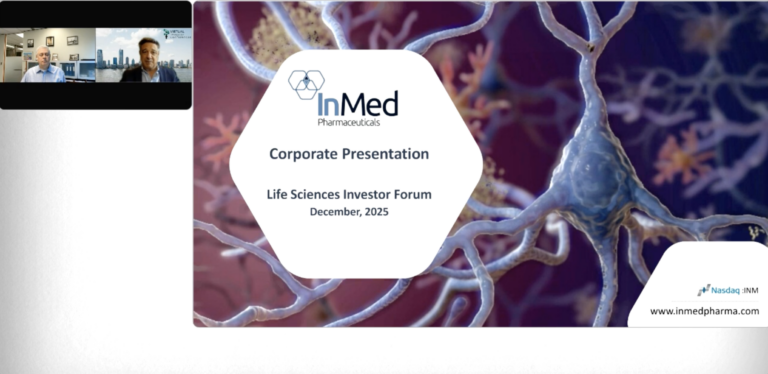
InMed’s CEO, Eric A. Adams, gives an overview of the company’s lead Alzheimer’s disease drug candidate, INM-901. In this presentation, Mr. Adams speaks about how INM-901 targets the reduction of neuroinflammation. Neuroinflammation is now recognized as a key driver of Alzheimer’s disease development and progression.
Newly approved anti-amyloid beta therapies have costly drug delivery challenges, limited therapeutic effects and potential brain swelling side effects. There remains is a major unmet medical need for new disease-modifying Alzheimer’s treatments.
In long-term preclinical studies, InMed’s INM-901 significantly reduced neuroinflammatory markers associated with Alzheimer’s disease. INM-901 also demonstrates a dose-dependent reduction of amyloid beta in the brain and positive trends in cognitive function, anxiety-related behavior and sensory responsiveness.
In the video presentation, Mr. Adams also speaks about the upcoming development plans for INM-901. InMed is continuing dose-ranging studies and starting to prepare for a pre-IND meeting with the FDA.